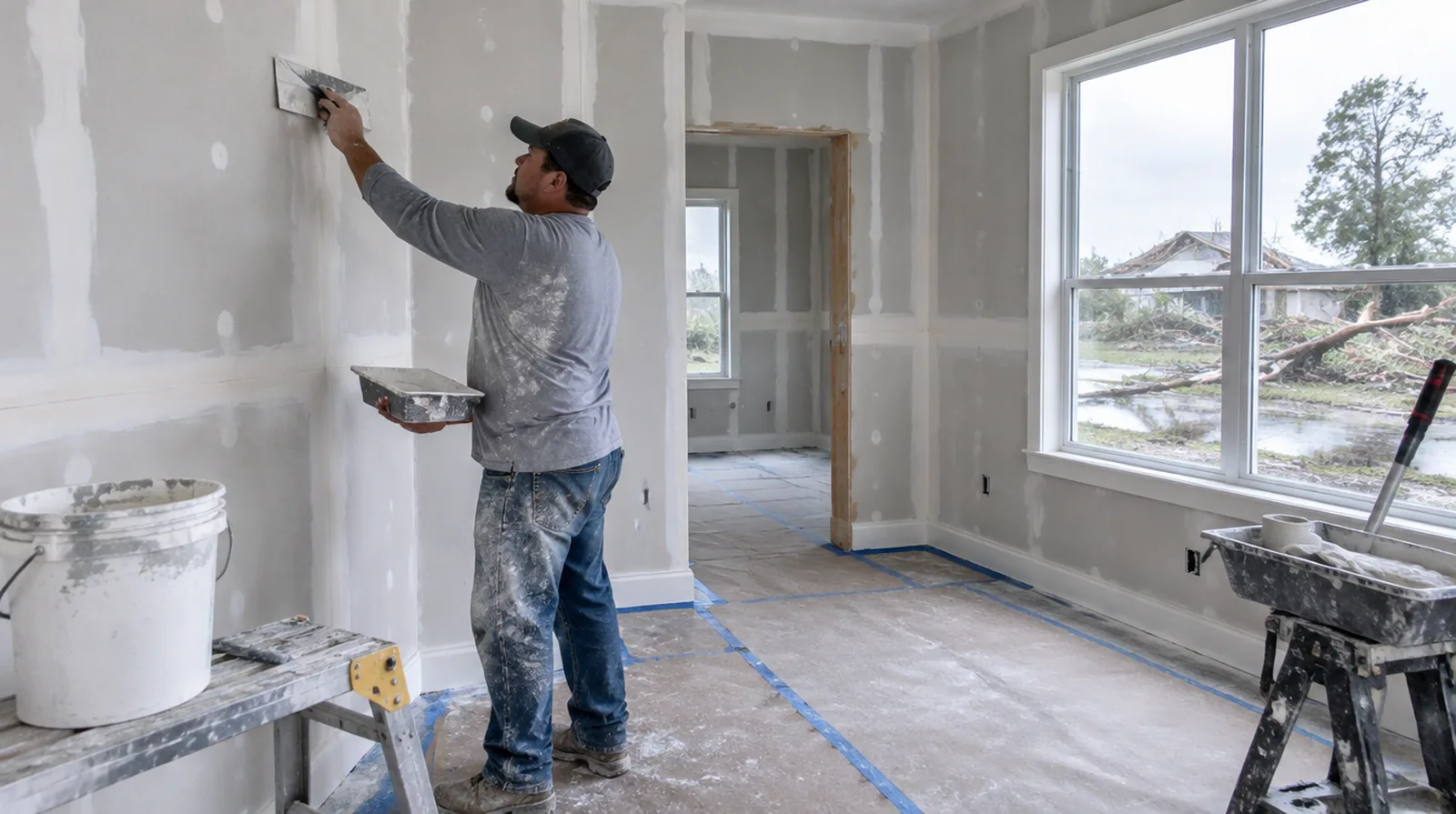
Cutting out only what is wet
After water exposure, the usual approach is to cut board a set distance above the visible line and inspect the cavity. Insulation that soaked up water usually needs to come out too. Wet wood framing should be dried before it is closed in. Saving dry board above the cut keeps the repair smaller.
Heat and humidity
Southeast Texas is hot and humid for much of the year, and air conditioning carries much of the moisture load. Board that has been wet can grow mold behind the surface even if it looks dry. Moisture readings are worth taking before deciding what to keep. Dehumidifiers often run for days before new board goes up.
Beaumont homes and storm history
Beaumont sits in the Golden Triangle of Southeast Texas, close to the Neches River and the Gulf. Hurricanes such as Rita, Ike and Harvey, along with later flooding, left many homes with interior water damage. A lot of local drywall work is about restoring walls after a leak or high water. Older neighborhoods such as the Oaks Historic District and Calder Avenue have classic homes, while west Beaumont has newer ranches.
Early decisions
Where the quoted work stops before painting, request an explicit description of what remains so the next decorating stage can be priced realistically.
When reviewing the finished work, use the agreed lighting and natural room viewpoints so the assessment reflects the intended use of the space.
Inspect supporting framing
Drywall follows the framing underneath it, so bowed studs or uneven backing can show through the finished face. Deal with significant framing irregularities while the structure is exposed, before the boards conceal it.
Rebuild supported edges
The new board section must connect firmly to suitable backing or sound framing. Stable edges reduce avoidable stress at the boundary between the retained face and the replacement.
Manage occupied areas
Dust protection and a defined work boundary are important when nearby rooms remain in use. Review noise and cleanup expectations in relation to the actual operations of the property.
Inspect the whole wall
Review corners, returns and service openings as well as the straight seams in the main wall. Check the finished plane under the planned lighting and from a side angle where possible.
Identify the existing pattern
First determine how the current texture creates its pattern and relief. Examine the surface in the light the interior actually receives before choosing a spray or hand applied method.
Stabilize torn paper
Exposed drywall paper can bubble when it receives wet compound without suitable preparation. Damaged spots need an appropriate sealing approach before the broad compound coats are applied.
About the illustrations
The website images are generated examples of drywall interiors and methods, not photographs of completed customer work. No customer reviews or qualifications are implied. The project form and the telephone shown on this page connect you with the next project conversation.
Explore the drywall services or view the address and map.
More planning details for Beaumont
After storms in Beaumont, interior walls often need repair once a roof leak has been fixed. The key is to remove only the board that was actually wet and to let framing dry before closing the wall. A moisture reading can show how far water traveled behind the paint.