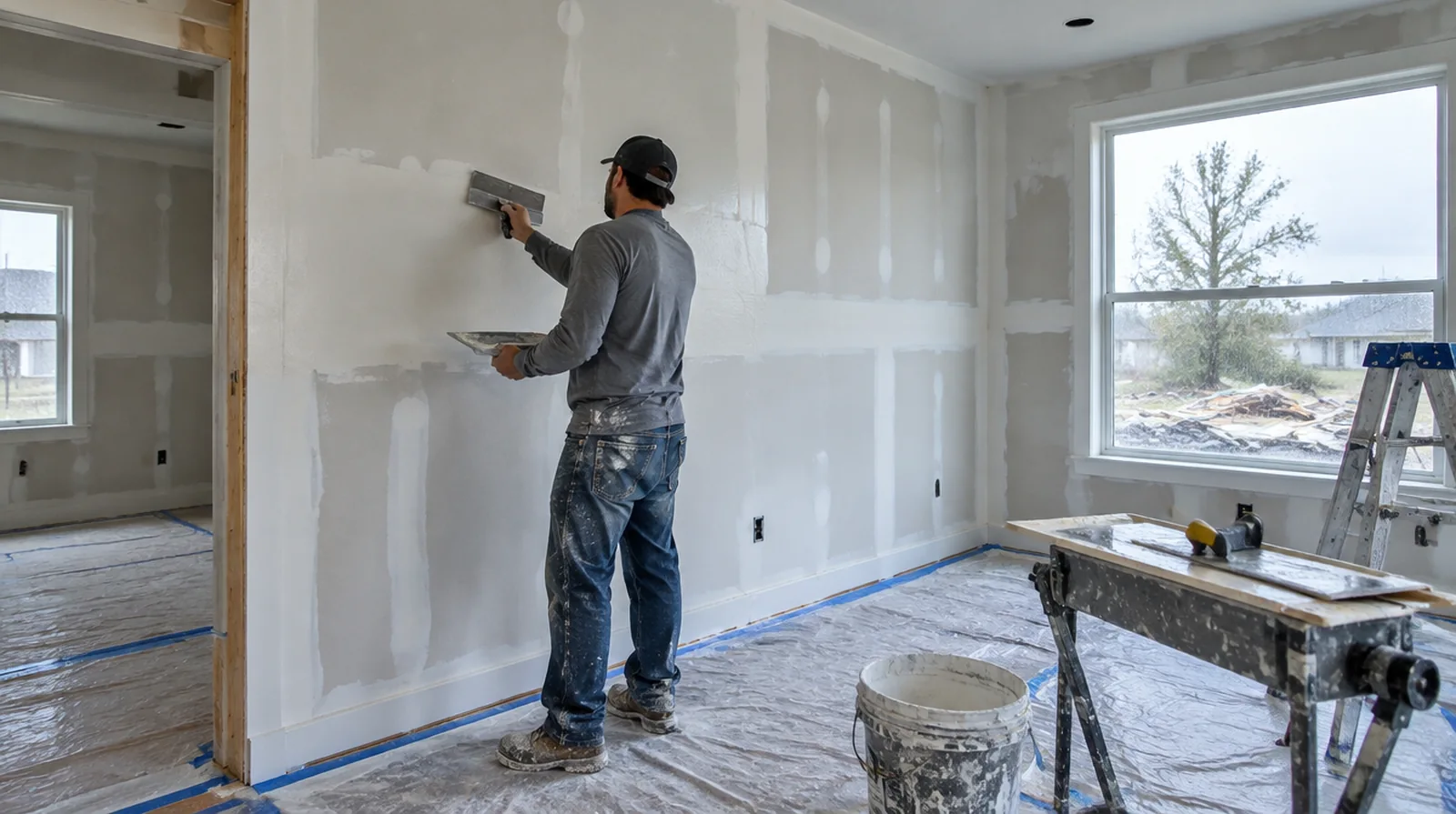
Stabilize torn paper
Exposed drywall paper can bubble when it receives wet compound without suitable preparation. Damaged spots need an appropriate sealing approach before the broad compound coats are applied. If the completion date matters most, allow for intervals between coats as well as active labor rather than assuming the entire process happens continuously.
Define the smoothing target
Flattening a light texture is different from correcting deep waves across an entire wall. The scope should describe what the skim is expected to improve and what remains outside that finish treatment. At a ceiling or wall containing fittings, assign removal and reinstatement duties for the affected devices before repair access is needed.
Refine with minimal sanding
Good application reduces the amount of sanding needed to achieve a uniform finish. Even so, plan dust protection and extraction for the fine particles produced by broad surface work. For a project with several trades, agree which inspection or handover point must happen before the next person starts work.
Clean and prepare the wall
Dust, grease and incompatible residues can interfere with adhesion. Select cleaning and any necessary bonding preparation according to the actual surface condition. When damage followed other building work, describe the nearby alterations and the sequence between those changes and the first noticeable defect.
Assess the existing coating
A thin new finish depends on the strength of the coating that will remain underneath it. The assessment should distinguish a sound but uneven surface from one that is actively peeling. At the handover inspection, review the finish from ordinary room positions using the lighting conditions that were agreed for the work.
Apply controlled thin layers
A skim coat is intended to refine the surface rather than build a heavy unsupported layer. More than one pass may be necessary where the current texture creates deeper low points. For a surface carrying numerous paint layers, discuss whether differences in the retained profile or sheen justify decorating a broader area.
Work around trim carefully
Baseboards, frames and fixed fittings create edges that need neat transitions and protection. Decide whether trim removal is needed or whether a neat stop against it is acceptable. If the completion date matters most, allow for intervals between coats as well as active labor rather than assuming the entire process happens continuously.
Prime before decoration
The new skim needs compatible priming before its final decorative coatings. Primer helps equalize absorption and may reveal small touch ups that should be resolved before the final coat. When the project space includes a doorway, check the clearance for panel movement as well as the amount of space available for finishing tools.
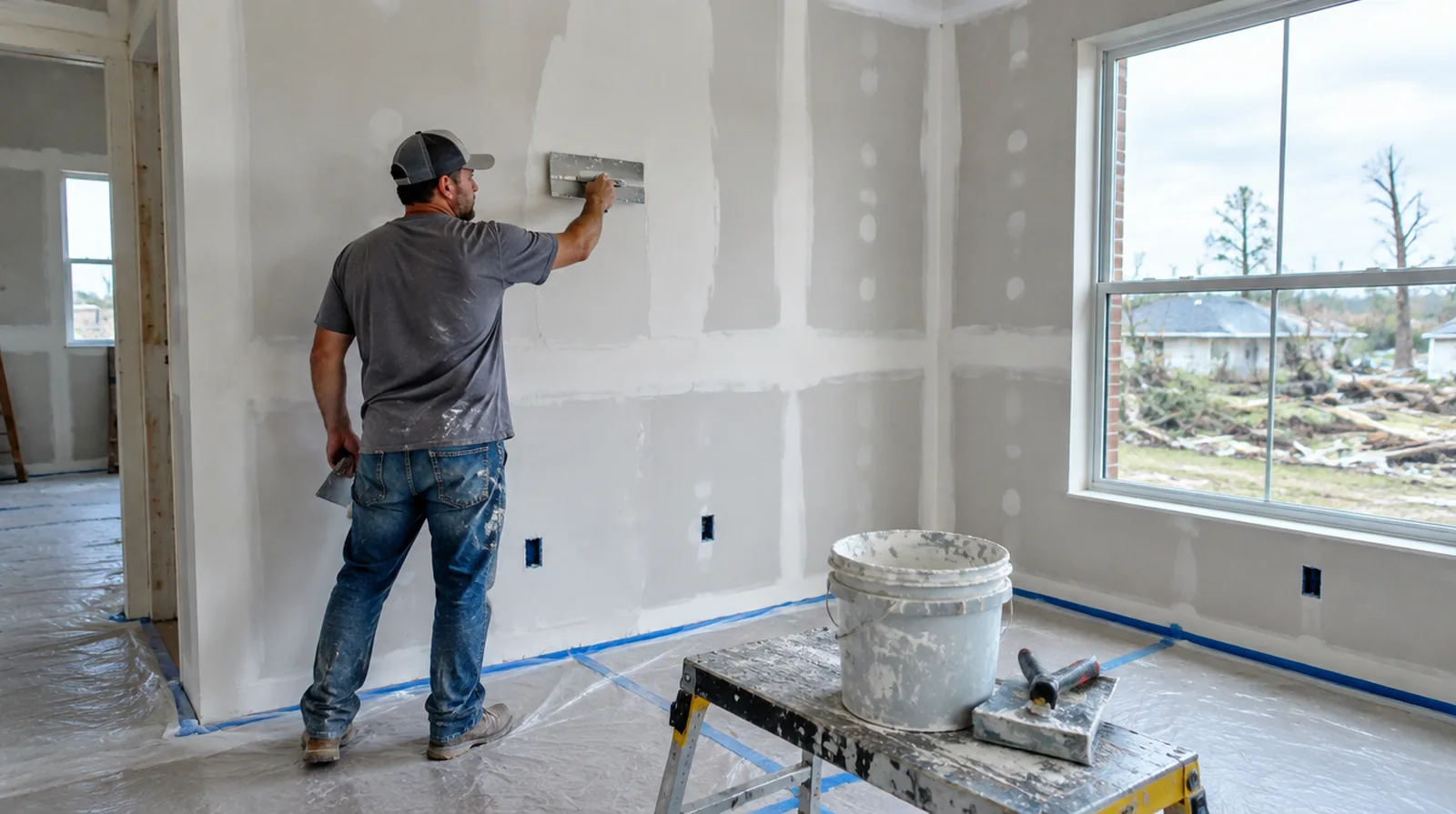
Let each coat dry
Room temperature, humidity and airflow influence drying time across a broad coated surface. Disturbing soft material too early can undermine an otherwise careful smoothing pass. If the surface condition is uncertain, allow for an assessment that can distinguish stable material from layers that should never be covered.
Check underlying movement
A skim coat improves the surface profile but does not repair structural movement or unstable board. Assess recurring cracks and complete necessary reinforcement before covering the area with a skim. For an initial assessment from pictures, provide an overall room photograph and a detailed view of the defect so both context and scale are apparent.
Project context in Beaumont
After storms in Beaumont, interior walls often need repair once a roof leak has been fixed. Gulf humidity keeps rooms damp, so running air conditioning during drying helps.
Scope questions before finishing
If the surface condition is uncertain, allow for an assessment that can distinguish stable material from layers that ought not to be covered.
For a surface carrying numerous paint layers, discuss whether differences in the retained profile or sheen justify decorating a broader area.
For a tightly furnished room, plan temporary storage and the minimum working clearance before material is carried into the property.
When the history of a repair is uncertain, note when it became noticeable and whether its appearance has altered across differing seasons.
For a project involving a building manager, confirm access hours and protection requirements before promising a start date or a short completion window.
If the proposal requires return visits, identify the purpose of each stage and the intervals during which finishing material needs to remain undisturbed.
While a removed panel exposes the wall cavity, complete the necessary review of concealed work before replacement board closes the opening.
For a room that stays in use, set a workable boundary around construction while retaining the access people need for normal daily activities.
Where light reflects along the wall, inspect the complete plane instead of limiting the review to the edge immediately next to the repaired section.
When comparing competing estimates, make sure their protection, surface finish and disposal allowances describe equivalent work before comparing the final prices.
Where occupants have dust sensitivity concerns, agree containment and cleaning measures before settling the way the space will be staged.
If the completion date matters most, allow for intervals between coats as well as active labor instead of assuming the entire process happens continuously.
Explore the Beaumont drywall overview for related options, or read the project planning information before arranging the next stage.
More planning details for Beaumont
The key is to remove only the board that was actually wet and to let framing dry before closing the wall. A moisture reading can show how far water traveled behind the paint. Single-story ranch homes often have attached garages that make good staging areas for board.