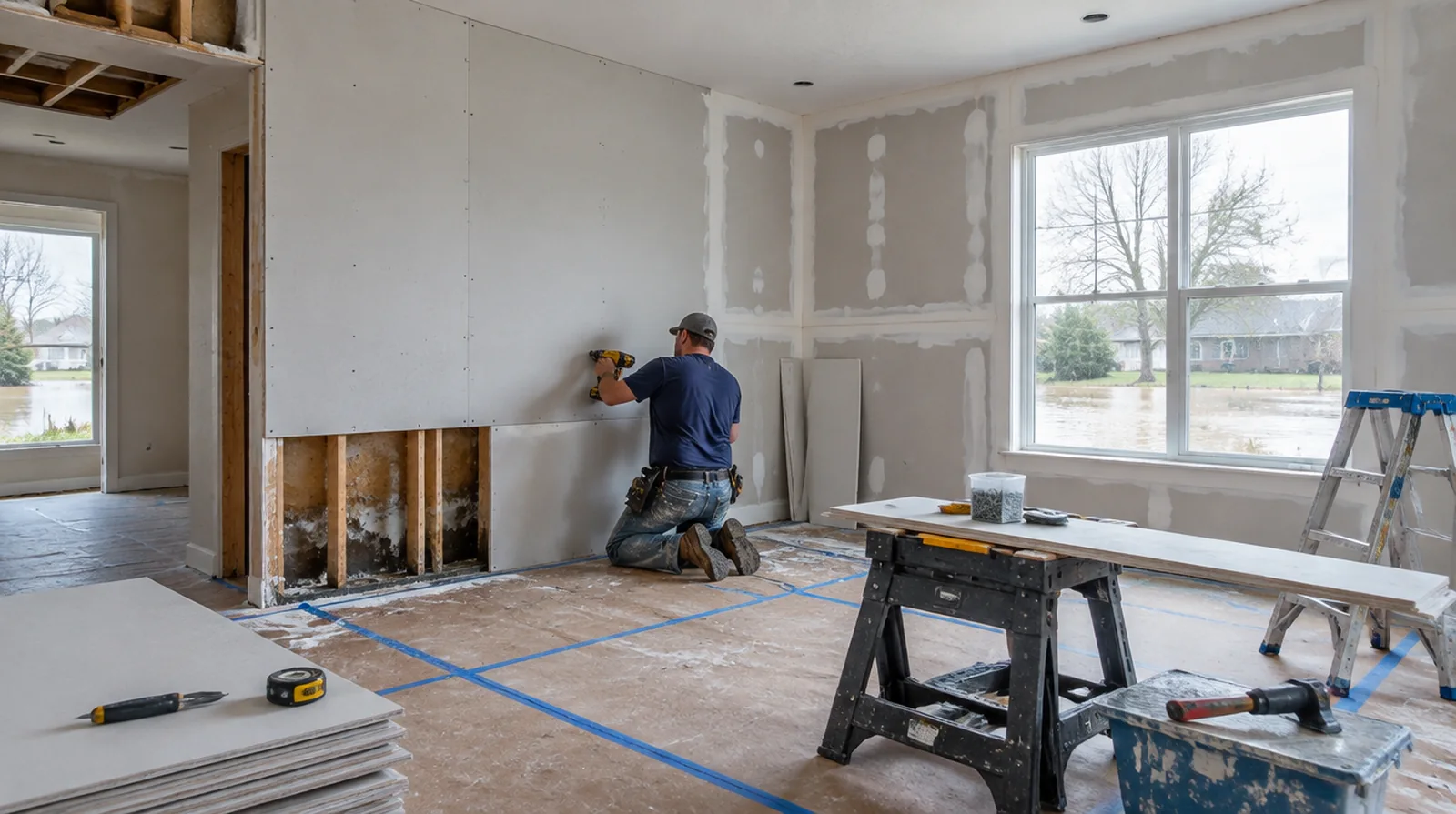
Define selective removal
A planned removal area opens the assembly for evaluation without automatically stripping every adjacent surface. Choose its edge to allow supported replacement and a finishing transition that can be blended effectively. For a room that stays in use, set a workable boundary around construction while retaining the access people need for normal daily activities.
Verify drying readiness
A surface that feels dry can still conceal moisture in insulation or framing. The project should identify who verifies the cavity is ready before replacement panels close it again. For a limited patch requiring substantial setup, assess the complete package of access and protection instead of relating cost only to the opening size.
Record the completed scope
Retain useful information about source repairs, material replacement and any drying checks performed by other trades. That documentation distinguishes the completed drywall scope from continuing upkeep and responsibilities elsewhere in the property. If the wall work belongs to a broader renovation, coordinate its order with flooring, cabinetry and trim rather than scheduling finishing in isolation.
Assess material condition
Staining, swelling, softened edges and loose paper help determine which panels might need removal. The affected material behind the finish may extend past the stain seen from inside the room. For a planned new wall mounted fixture, resolve its backing requirements while the cavity remains open instead of cutting into completed drywall later.
Agree on decorative boundaries
Repairing the damaged board and restoring a uniform painted finish are related but distinct tasks. Review a larger painting boundary if local decoration would leave a conspicuous difference around the patch. For an initial assessment from pictures, provide an overall room photograph and a detailed view of the defect so both context and scale are apparent.
Resolve the water source
A leak or condensation problem must be addressed before replacing the affected drywall. Surface repairs alone cannot prevent damage from returning when water is still reaching the assembly. For a planned new wall mounted fixture, resolve its backing requirements while the cavity remains open instead of cutting into completed drywall later.
Match the board assembly
Replacement board should suit the current thickness and any applicable wall or ceiling assembly requirements. Changing to a moisture resistant board does not excuse leaving the original water problem unresolved. Where the wall surface meets fixed furniture, clarify whether removal is included or whether the finish will terminate at the accessible edge.
Rebuild supported edges
The new board section must connect firmly to suitable backing or sound framing. Stable edges reduce avoidable stress at the boundary between the retained face and the replacement. If the project is part of a larger remodel, settle the sequence with flooring, trim and cabinet work before setting a final finishing date.
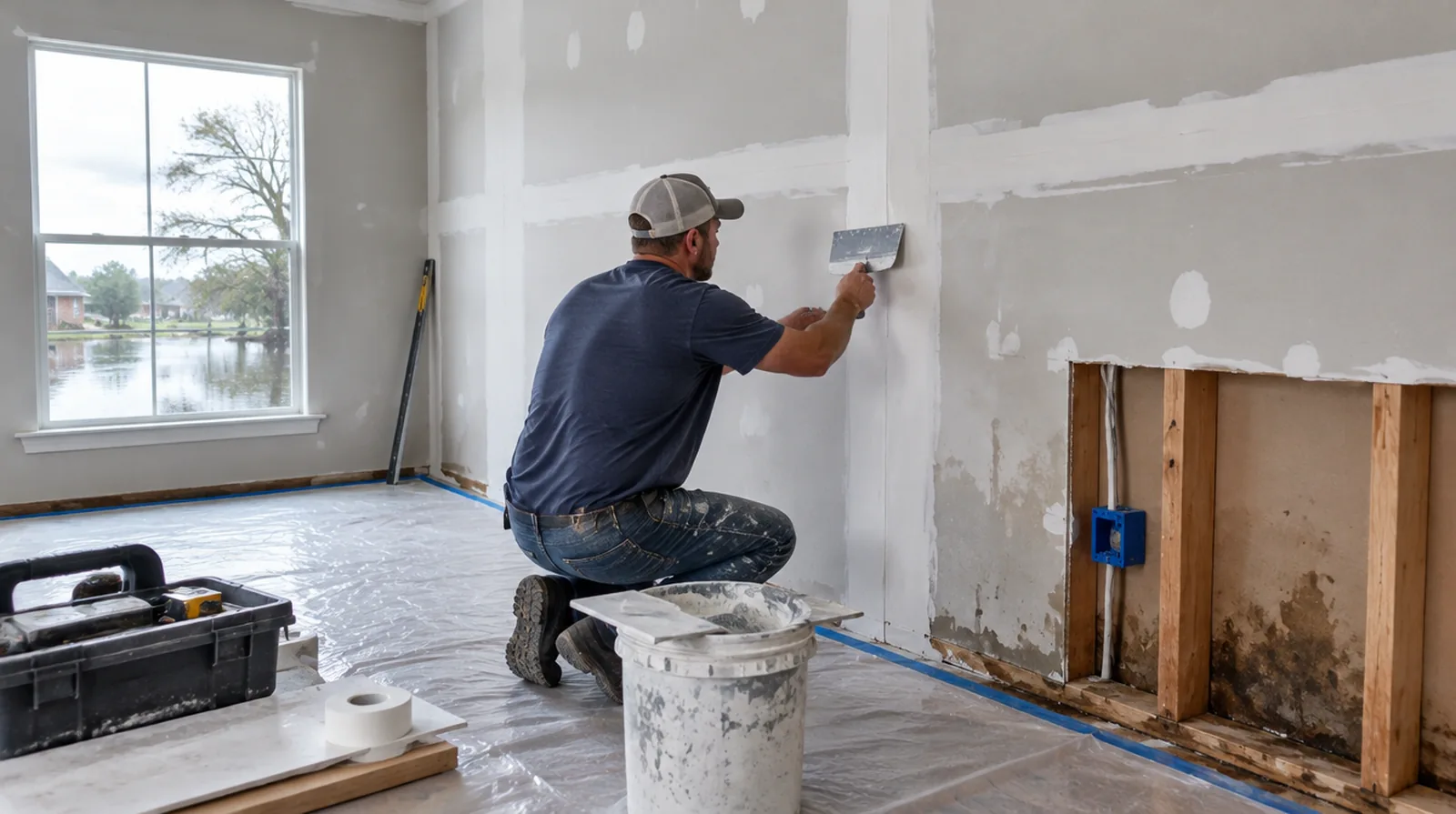
Inspect concealed components
Insulation, electrical work and plumbing exposed during removal may require separate assessment or replacement. Resolve the condition of exposed insulation, wiring and plumbing before closing the wall. When the wall surface has strong reflected light, look at the full plane rather than judging only the narrow strip immediately beside the patch.
Finish after moisture control
Tape and joint compound belong on stable dry material instead of a damp or deteriorating substrate. Give each finishing layer time to dry rather than trapping dampness under additional material. When the decorative coating has been selected, tell the finisher its intended sheen and color while the substrate preparation standard is still being agreed.
Project context in Beaumont
Single-story ranch homes often have attached garages that make good staging areas for board. Match the new texture to the old so the repaired hallway does not stand out.
Scope questions before finishing
At a repair beside an opening, allow clearance for moving board through the doorway and space to use the finishing tools effectively.
If the current finish is unusual, keep a small reference sample or a close photograph to support the discussion about blending and restoration.
When comparing competing estimates, make sure their protection, surface finish and disposal allowances describe equivalent work before comparing the final prices.
When painting is outside the proposal, describe the remaining decorative preparation clearly so another contractor can price that stage accurately.
For walls beside bright windows, review a dry sample from an oblique angle as well as looking straight at the repaired surface.
For a surface carrying numerous paint layers, discuss whether differences in the retained profile or sheen justify decorating a broader area.
When a wall has repeated defects, keep a record of earlier repair attempts so a new assessment does not simply repeat an unsuccessful approach.
If scheduling is the main concern, separate hands on labor from drying intervals instead of treating every visit as a full day of active work.
For a repair that crosses several surfaces, measure the affected planes separately so the estimate can explain where each finishing treatment starts and stops.
If an independent painter completes decoration, agree the condition of the handed over surface and assign responsibility for small final corrections.
If a household member is sensitive to dust, discuss containment and cleaning expectations before choosing how to stage the space work.
Where a surface has been painted many times, consider whether differences in texture or sheen will require a wider decorative treatment.
Explore the Beaumont drywall overview for related options, or read the project planning information before arranging the next stage.
More planning details for Beaumont
After storms in Beaumont, interior walls often need repair once a roof leak has been fixed. The key is to remove only the board that was actually wet and to let framing dry before closing the wall. A moisture reading can show how far water traveled behind the paint.